I love my garden, and I love working in it. To potter with green growing things, watching each day to see the dear, new sprouts come up, is like taking a hand in creation, I think. Just now my garden is like faith—the substance of things hoped for.”
Lucy Maud Montgomery, author, “Anne’s House of Dreams”
MY LOVE of gardens, that is, planting my own garden, did not come naturally or because I felt the act of gardening was always a part of me. Far from it. I think my mother tried to instill in her children a love of gardening, but we didn’t take to the process as she did. While every year and every day in the growing season in New England we could find her among the plants, I preferred the result rather than the process of getting there.
Getting dirty was not something I was ever fond of, nor did I get along with the bees, two items inescapable in a garden. And although I would take a short stroll through the yard to admire her handiwork, I looked forward to returning inside and out of the fresh air.
These days, you would never know I ever had any of these phobias or distaste for the outdoors. I often garden with my bare hands, the dirt lodging underneath my fingernails. I grow pollinator plants to invite honey and bumblebees, as well as butterflies, hummingbirds, goldfinches, and any other insect or bird desiring to make use of the food I provide them. I spend more time out-of-doors in good weather rather than couped inside.
The more time I spend observing plant life, including native plants growing along the roadside or the path I often visit in my walks in the park, the more I appreciate the variety of beauty around us. I take far too many pictures of flowers, write an abundance of poems and prose inspired by the vegetation, and constantly research to find out what I can about the plants I observe.
When the plants are trampled, pulled up, stolen by rabbits, hacked by the landscapers, or otherwise die, I mourn the loss in a big way. My husband says I’m obsessed and take my gardening far too serious. But I think gardening, for me, is a way to heal emotionally from events over which I have no control. It is a way for me to bring color into my world; create a room full of scent and birdsong and peace; to give back to our ecosystem. In a way, I feel…useful.
On particularly difficult days, when I receive yet another rejection for my writing, and I feel as if I’m running aimlessly on a hamster wheel, gardening reminds me that it takes time to see the results of one’s hard work. Most perennial plants, for example, take a good three years to reach maturity, so that the previous years might seem to drag on. But I keep adding to the yard, planting annuals and other small plants to fill out what has yet to thrive. And while it seems my publishing debut is taking a while, I continue to write a variety of prose—whether poetry or fiction or essays—and pitch along the way, knowing something beautiful will happen at the end.
As artists, we understand it takes effort to get our work noticed and published, but we cannot control the results. Much like gardening where we cannot control the weather, sometimes things happen (or grow) because of dumb luck.
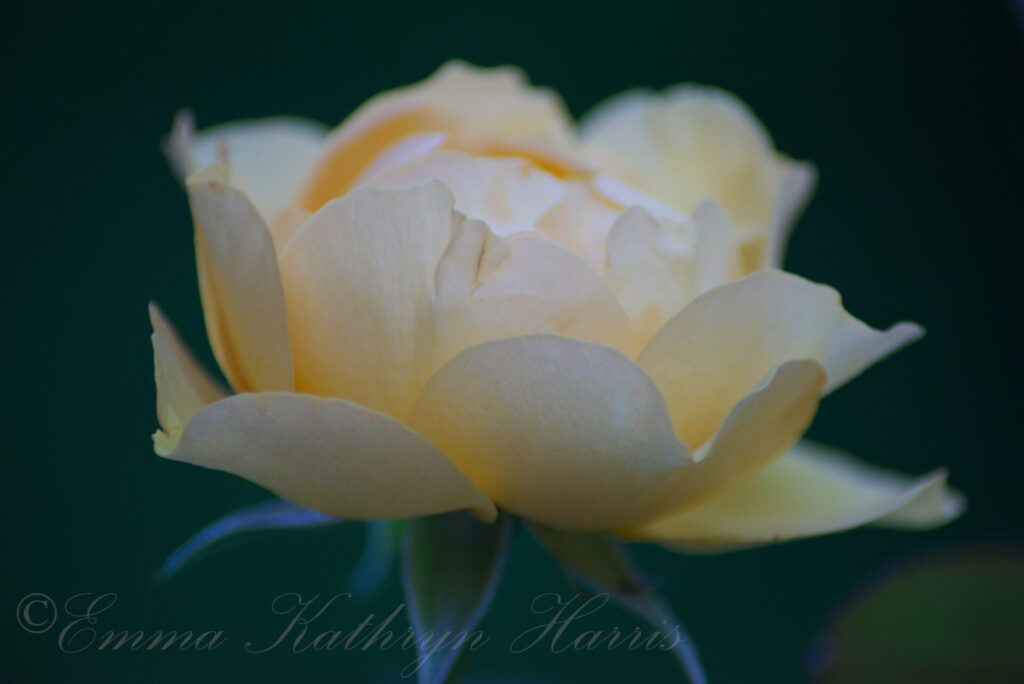
Last year, my Julia rose bush did not do well. At one point, however, I noticed a single rose at the top of the scrawny bush where the rest of the flowers seemed to have given up. That rose stood out and radiated beauty. It grew against environmental odds. Similarly, we keep going despite the challenges we face so that ultimately, we stand out from the crowd as a jewel (or rose) among the thorns.
Follow Emma Kathryn Harris on Facebook and Instagram.

