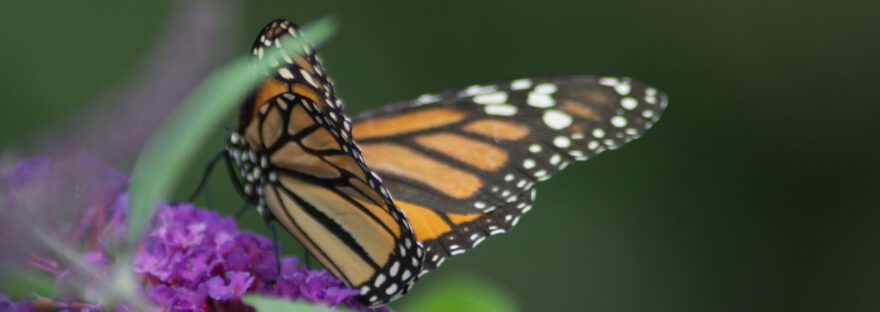
I almost wish we were butterflies and liv’d but three summer days – three such days with you I could fill with more delight than fifty common years could ever contain.”
John Keats, poet (from “Bright Star: Love Letters and Poems of John Keats to Fanny Brawne”)
I planted 29 packets of seeds in the spring. A mixture of wildflower seeds, some perennials, and a few annuals. I stick tags in the ground where I plant them so I won’t sow more in the same spot. However, I don’t write on the tags because I always think I’ll figure it out once the plants grow.
When am I going to learn that (1) I don’t know the plants as well as I think I do, and (2) brain fog is my closest companion?
One challenge this presents is when the growth begins—if I can’t immediately identify it, I am left wondering if it is a plant or a weed? As one plant-weed began to grow in the middle of the garden, I left it alone because (1) I do not remember what I planted, (2) it could be part of the seed “mix,” or (3) if I did not plant it, I’m more clueless. It continued to grow until it was as tall as me, and only then did it begin to produce strongly scented, small purple-bluish flowers, bunches of them protruding like upside down cones. Please don’t let this be what I think it is, I sighed.
There is a butterfly bush in my backyard which I planted about three years ago, before I was aware of my sin. The plant is invasive in North Carolina. I had already decided I was going to dig it up this winter and try to destroy it. However, my front yard is evidence that the task will not be easy. Did the birds conspire, grab the backyard bush’s seeds to drop in my front yard? Did the wind carry the seeds in its arms only to spread them in the front? It is hard to know. What I DO know is I have a tall, thick, invasive butterfly bush in my front yard I did not plant.
And it attracts the most beautiful butterflies. Red-Spotted Purple, Eastern Tiger Swallowtail, Monarch, Orange Sulphur, Sachem, Great Spangled Fritillary butterflies—they are all descending on this bush, feasting on the sweet nectar from the delicate flowers. It is a calming sight. I cannot sit still—I’m constantly grabbing my camera to capture their colorful wings glimmering under the sunlight.
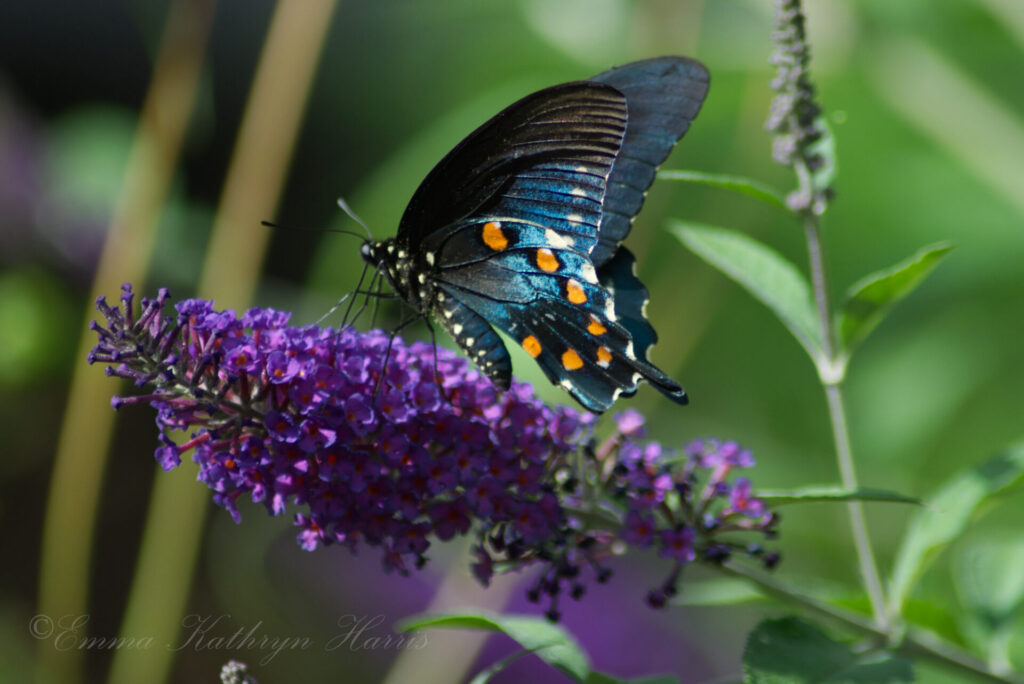
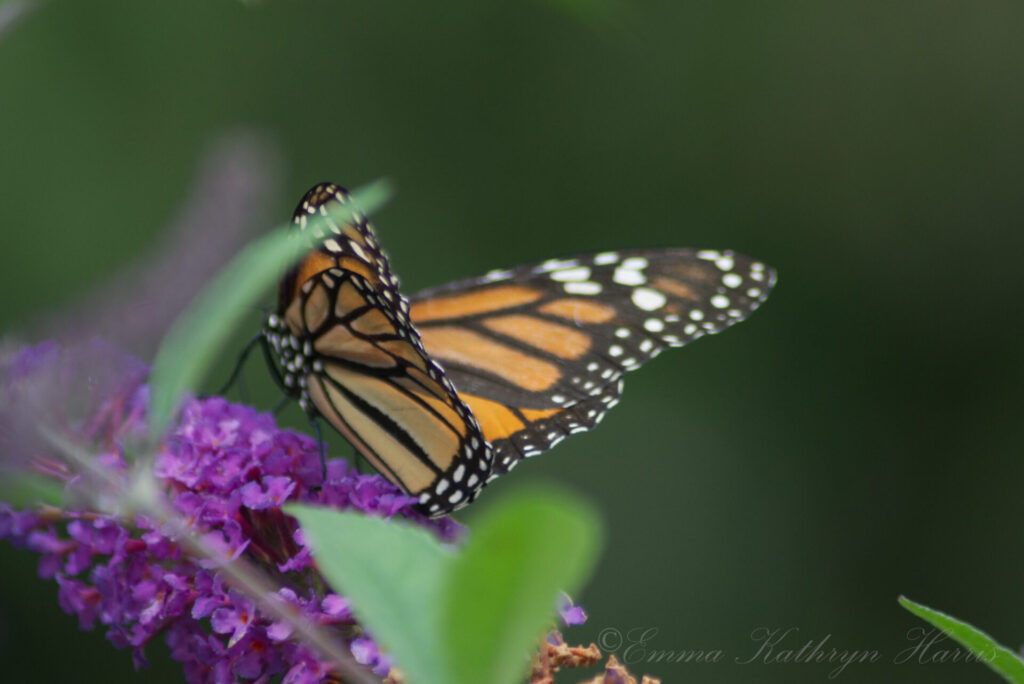
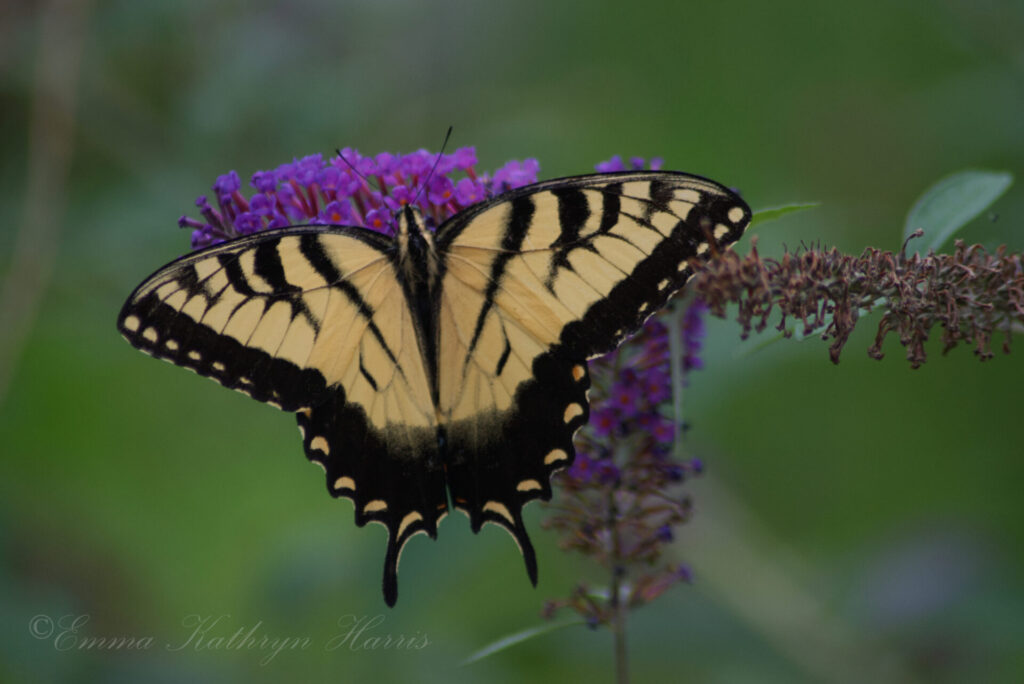
The bees are equally enjoying the additional choice of flower as they buzz through. While the marigolds, zinnias, butterfly weed, coneflowers, and cosmos are among their chosen variety, now the purple flowers are a treat for both the butterflies and bees.
I plan to dig up this bush, even though it sounds cruel, and make a desperate attempt to collect the seeds sure to fall and wreak havoc in next year’s garden. But for now, while the bushes are a popular attraction for the pollinators, I am deriving pleasure from my mistakes and from what nature unknowingly spreads, even if they are the wrong seeds.
Follow Emma Kathryn Harris on Facebook and Instagram.

